

How to Check Original Health & Beauty Products in Pakistan – Complete Guide
Buying health, beauty and skincare products online in Pakistan has become much easier, but checking whether a product is original can sometimes be confusing. Similar packaging, copied labels, unusually low prices and unverified sellers can make it difficult to distinguish a genuine product from a questionable one.
Whether you are shopping for collagen supplements, glutathione products, vitamin C supplements, whitening soaps, skincare serums, face masks, body care products or antiperspirants, a few simple checks can help you make a more informed purchase.
In this guide, we explain how to check original health and beauty products in Pakistan before placing your order.
Why Is It Important to Check Product Authenticity?
Beauty and wellness products are applied to the skin or consumed as supplements, so product quality, packaging and authenticity matter. An imitation product may have different ingredients, incorrect storage, damaged packaging or incomplete manufacturing information.
Before purchasing, customers should check the seller, product packaging and available manufacturer information instead of relying only on attractive pictures or a very low price.
1. Check the Product Packaging Carefully
The packaging is one of the first things you should inspect. Genuine products usually have professionally printed packaging with consistent fonts, colours and product information.
Look for:
- Clear product and brand name
- Properly printed labels
- Ingredients or composition information where applicable
- Manufacturing and expiry dates
- Batch or lot number
- Manufacturer or distributor details
- Correct product weight, quantity or capsule count
- Barcode, QR code or security seal where supplied by the manufacturer
Blurred text, spelling mistakes, damaged seals or inconsistent printing should be treated as warning signs.
2. Check the Batch Number and Expiry Date
Before using any skincare, cosmetic or supplement product, inspect the batch number, manufacturing date and expiry date printed on the packaging.
Do not buy a product if these details appear removed, overwritten or suspiciously altered. Where possible, compare the information on the outer box with the bottle, sachet, tube or container inside.
3. Compare the Product With Official Packaging
Product designs sometimes change, so packaging differences do not automatically mean a product is fake. However, checking current manufacturer packaging can help identify major inconsistencies.
Compare details such as:
- Logo placement
- Product name and spelling
- Container size
- Label design
- Number of capsules or sachets
- Ingredient information
- Country of manufacture
Always compare the exact variant because brands may sell several similar versions of the same product.
4. Be Careful With Extremely Low Prices
A discount does not mean that a product is fake. Online stores regularly offer promotions and sale prices. However, a price that is dramatically lower than the normal market range deserves additional checking.
When comparing prices, make sure you are comparing the same:
- Product size
- Number of capsules
- Number of sachets
- Single item versus bundle
- Old versus new packaging
5. Check Whether the Product Is Properly Sealed
Many beauty and wellness products include protective seals, shrink wrapping, foil seals, sealed sachets or tamper-evident packaging.
If a product normally comes sealed but arrives opened, leaking, damaged or improperly packed, avoid using it until its authenticity and condition have been confirmed.
6. Read the Ingredients and Usage Instructions
A genuine-looking package alone is not enough. Read the label carefully and understand what the product contains and how it should be used.
This is especially important for products such as:
- Collagen supplements
- Glutathione supplements
- Vitamin supplements
- Whitening or brightening products
- Serums and lotions
- Facial soaps
- Body scrubs
- Antiperspirants
Do not rely on exaggerated online claims that are not supported by the product label or manufacturer information.
Popular Health & Beauty Products Customers May Want to Verify
There are many imported and local beauty products available in Pakistan. Products similar to the following are commonly searched by customers who want to check packaging, price and authenticity before ordering:
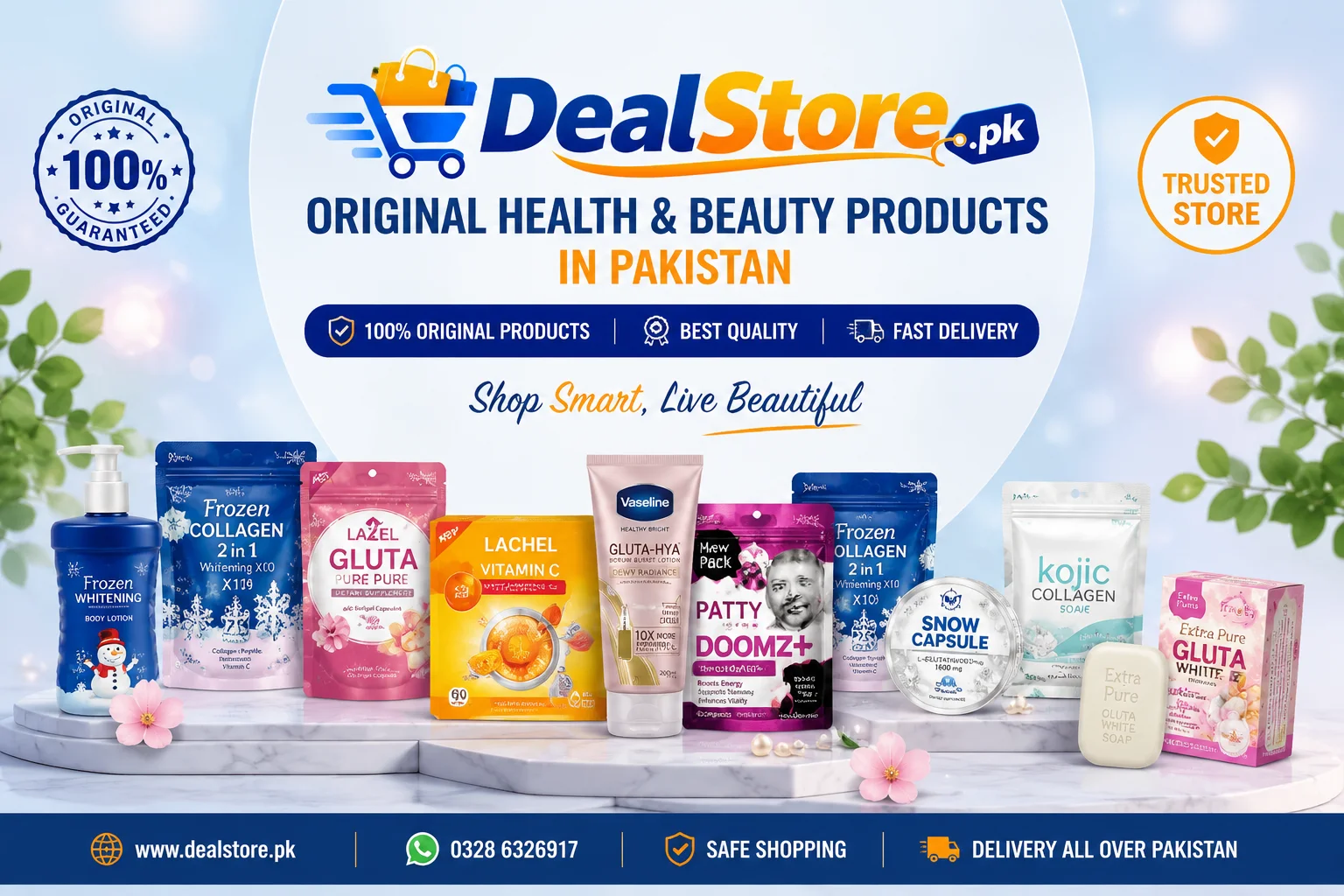
- Frozen Collagen Plus 2 in 1
- Frozen Collagen
- Frozen Detox
- Frozen Whitening Bundles
- Lazel Gluta Pure
- Lazel Gluta Pure & Frozen Collagen bundles
- Lachel Vitamin C
- Gluta Snow Capsules
- Extra Pure Gluta White Soap
- Kojic Collagen Soap
- Vaseline Healthy Bright Gluta-Hya Serum Burst Lotion
- A Bonne Spa Milk Salt Scrub
- KA UV Extreme Protection Spray SPF 50+
- Collagen Moistfull Ampoule Face Mask
- Q10 Ageless Ampoule Face Mask
- Alpha Arbutin Whitening Ampoule Face Mask
- Vitamin C Ampoule Face Mask
- HYA Miracle Ampoule Face Mask
- Patty Doomz Capsules
- Certain Dri Antiperspirant
Because packaging and formulations can change over time, customers should verify the exact product variant rather than relying only on an old image found online.
How to Check Original Collagen Supplements in Pakistan
Collagen supplements are available as capsules, powders, drinks and sachets. When purchasing products such as Frozen Collagen or similar supplements, check the complete packaging before use.
Important details include the manufacturer name, serving information, ingredient panel, batch number, expiry date and package quantity.
If the product comes in individual sachets, compare the printing and batch details on the sachets with the outer box whenever possible.
How to Check Original Glutathione Products
Glutathione products in Pakistan are sold as capsules, soaps, lotions, serums and combination supplements. Customers should be particularly cautious of products advertised with unrealistic or guaranteed results.
Check the label for ingredient information and recommended usage, and remember that cosmetic or supplement results can vary from person to person.
How to Check Original Skincare Soaps and Lotions
Products such as Kojic Collagen Soap, Gluta White Soap and Gluta-Hya lotions should arrive in clean, properly sealed packaging.
Check:
- Net weight or volume
- Ingredient list
- Manufacturing information
- Batch details
- Expiry date
- Seal and packaging condition
Stop using a cosmetic product if you experience significant irritation or an unexpected reaction.
7. Check the Online Store Before Ordering
The seller is just as important as the product. Before ordering health and beauty products online in Pakistan, check whether the website provides clear business and customer-support information.
A reliable ecommerce store should normally provide:
- Clear product descriptions
- Visible prices
- Contact information
- Shipping information
- Return and refund policy
- Privacy policy
- Terms and conditions
- Order support
8. Ask for Actual Product Pictures When Necessary
If packaging authenticity is important to you, ask the seller whether current product photographs are available. This can be particularly useful when manufacturers have introduced new packaging.
Actual pictures may help you check the seal, label, size and general packaging before ordering.
9. Do Not Trust “100% Guaranteed Results” Claims
No responsible seller should guarantee identical cosmetic or wellness results for every customer. Skin type, routine, age, diet, product formulation and individual response can all influence results.
Claims such as instant permanent whitening, guaranteed weight reduction or guaranteed treatment of a medical condition should be viewed carefully.
10. Check Imported Products More Carefully
Pakistan has a large market for imported skincare and beauty products. Imported goods can be genuine, but packaging may differ depending on the country or production batch.
Instead of assuming that every packaging difference means a product is fake, check the complete product information and compare the same regional variant whenever possible.
Original vs Fake Health & Beauty Products – Quick Comparison
| Check | What to Look For | Warning Sign |
|---|---|---|
| Printing | Clear and consistent | Blurred or poor-quality text |
| Seal | Secure and undamaged | Broken or missing seal |
| Batch Number | Clearly printed | Missing or altered |
| Expiry Date | Clearly visible | Removed or overwritten |
| Price | Reasonable for package size | Suspiciously low without explanation |
| Seller | Contact and policies available | No clear support information |
Where to Buy Health & Beauty Products Online in Pakistan?
Customers looking for health, beauty, skincare and personal-care products can browse available products at DealStore.pk. Before ordering, always review the product description, package quantity, price and usage information shown on the individual product page.
Availability, packaging and prices may change, so check the latest product page information before completing your order.
Frequently Asked Questions
How can I check whether a beauty product is original in Pakistan?
Check its packaging, seal, batch number, expiry date, manufacturer information, ingredients and seller details. Compare the exact product variant with reliable manufacturer information whenever possible.
Does a barcode prove that a product is original?
No. A barcode can help identify a product, but a barcode alone does not guarantee authenticity because packaging elements may potentially be copied.
Does different packaging mean a product is fake?
Not necessarily. Manufacturers frequently update packaging. Compare the batch, product variant and current manufacturer packaging before making a conclusion.
Why do prices vary between online stores in Pakistan?
Prices can vary because of import costs, exchange rates, package sizes, promotions, stock age and seller margins. Always compare identical variants and quantities.
How can I check an original collagen supplement?
Inspect the manufacturer information, ingredients, batch number, expiry date, seal and serving details. Compare the exact flavour, size or variant when checking packaging.
Should I use a product if its seal is broken?
If a product is normally supplied with a protective seal and that seal is unexpectedly broken or damaged, it is better not to use it until the product condition has been properly checked.
Can skincare products give different results to different people?
Yes. Results vary according to skin type, product formulation, routine and individual response. Avoid relying on guaranteed-result claims.
Where can I check health and beauty products in Pakistan?
You can review product information, pricing and available health and beauty products online at DealStore.pk.
Final Words
Checking an original health or beauty product does not depend on one feature alone. Packaging, seals, batch numbers, dates, ingredients, manufacturer details, seller reputation and price should all be considered together.
Whether you are purchasing collagen, glutathione, vitamin C, skincare soaps, lotions, masks, supplements or personal-care products in Pakistan, taking a few minutes to verify these details can help you make a more informed buying decision.
Explore health and beauty products at DealStore.pk and always check the latest package and product information before ordering.

Leave a Reply